
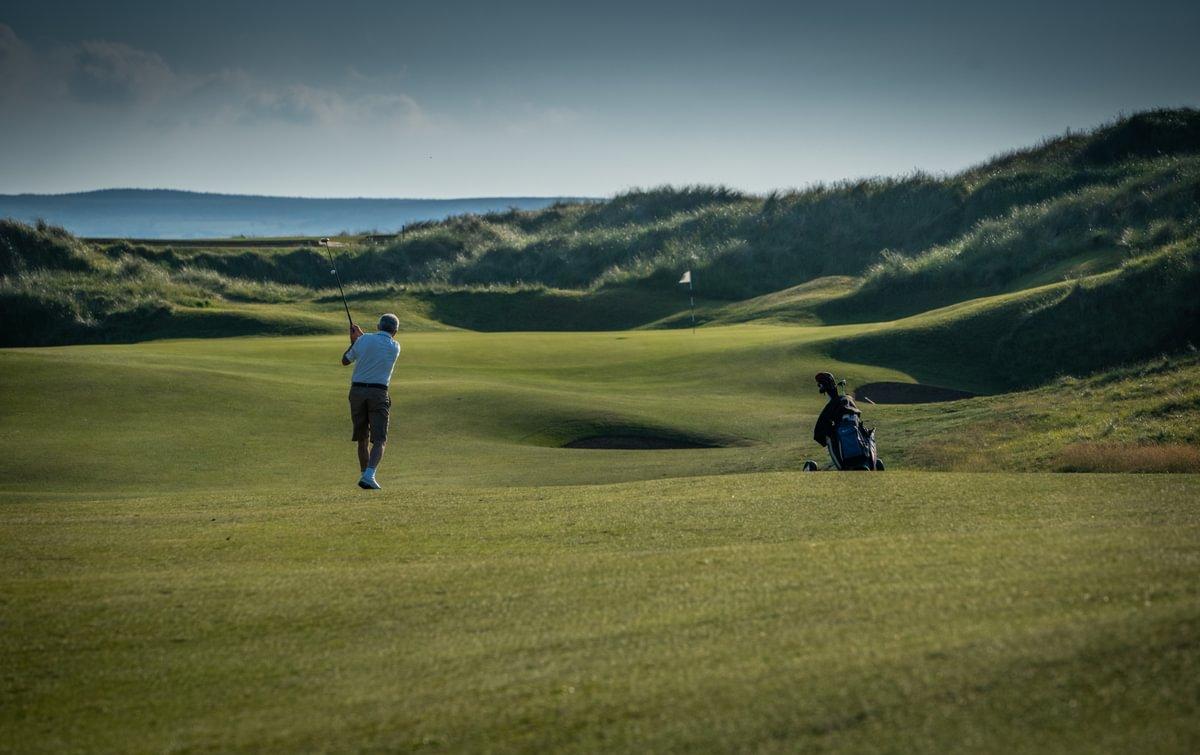
Scotland is the undisputed birthplace of golf. Indeed, it’s a land where ancient links meet dramatic coastlines, misty Highland glens, and over seven centuries of the game’s history. With this in mind, with more than 550 courses spread across the country, golfing in Scotland offers something no other destination can match: the chance to play legendary, world-ranked courses on public land, for green fees that would be a fraction of what you’d pay at a comparable U.S. club. Whether you’re chasing a bucket-list round on the Old Course St Andrews, testing yourself at Carnoustie, or discovering the remote perfection of Royal Dornoch, a Scotland golf trip is the ultimate pilgrimage for any serious golfer. In short, this guide covers the best golf courses in Scotland, what makes each unique, and how to pair your rounds with iconic sightseeing.
Why Is Scotland Every Golfer’s Dream Destination?
Golf was born here in the 15th century, when Scottish shepherds knocked stones into rabbit holes along coastal grassland, the origins of links golf as we know it. Since then, The Open Championship rotates through iconic venues, drawing pros and amateurs alike. Moreover, affordable green fees (compared to U.S. equivalents), stunning scenery, and welcoming clubhouses make it accessible. Plus, the weather, which is often unpredictable, adds an element of thrill.
So, here’s what makes Scotland golf vacations unlike anything else:
First, there are over 550 courses, one of the highest concentrations per capita in the world
Authentic public links golf — including the Old Course at St Andrews — open to visiting golfers
Green fees dramatically more affordable than equivalent U.S. private clubs
Also, summer daylight stretching to 18 hours, giving you time for 36 holes a day
Finally, The Open Championship rotates through Scottish venues, steeped in history at every stop
Best Time to Visit
Generally, May through September offers the best conditions. In particular, June and July bring the longest daylight and most stable weather. Alternatively, late spring and early autumn deliver quieter courses, lower green fees, and extraordinary golden light for photography.
The Best Golf Courses in Scotland
The Old Course at St Andrews
Par 72 | 7,305 yards | Home of Golf

There is no more important golf course on the planet. In fact, The Old Course has been played continuously since the 1500s, making it the oldest golf course in the world, and it has hosted The Open Championship around 30 times — more than any other venue. From there, legends from Old Tom Morris to Tiger Woods have walked these fairways.
The wide fairways invite aggression, but over 100 invisible pot bunkers demand respect. In addition, shared double greens — used by two holes simultaneously — are a feature found almost nowhere else. The Hell Bunker on the 14th is a round-wrecking pit. At the same time, the Road Hole (17th) is one of the hardest par 4s in golf, demanding a precise approach over the old hotel wall with the Road Bunker guarding the green. Ultimately, walking across the ancient Swilcan Bridge on the 18th fairway is a moment every golfer must experience.
Beyond that, St Andrews town enchants with its medieval ruins, sandy beaches, and the British Golf Museum. Stay at the Rusacks St Andrews hotel for views overlooking the 18th fairway. If so, if you’re combining golf with family, non-golfers can explore the university town or join a guided tour.
Alternatively, walk the Fife Coastal Path. Linking the Forth and Tay Estuaries, the Fife Coastal Path runs for over 183 km through the varied landscapes of Fife. Along the way, the route links picturesque former fishing villages as well as the home of golf — St Andrews — with its ancient university. In between, there are miles of golden beaches, attractive woods, and nature reserves. However, the route also threads its way through industrial towns such as Kirkcaldy and Leven. As a result, history is everywhere, from former coal yards to ruined castles and prehistoric carvings in the Wemyss caves.
Carnoustie Golf Links
Par 72 | 7,402 yards | “Car-nasty”
Carnoustie has earned its nickname. Indeed, it is an icon of world golf and has hosted no fewer than 8 Open Championships. Most importantly, it is widely considered the toughest Open Championship venue in Scotland. As a result, it punishes any lapse in concentration with narrow corridors, thick rough, and the infamous Barry Burn. For example, Jean Van de Velde’s catastrophic 1999 Open collapse is now golf legend. In particular, the closing four holes rank among the hardest finishes in championship golf. Therefore, survive them and you’ll feel like a champion.

Royal Dornoch Championship Course
Par 70 | 6,760 yards | World Top 10
Remote, pure, and extraordinary. In other words, Royal Dornoch sits in the Scottish Highlands, two hours north of Inverness, and golf writers who make the pilgrimage routinely declare it one of the finest natural courses they’ve ever played. For instance, Tom Watson called it his favorite course in the world.
Elevated plateau greens, sharply contoured fairways, and sweeping views define the experience. Notably, the 14th hole, “Foxy,” is celebrated as one of the great holes in golf. Here, the terrain, not bunkers, does all the defending. To sum up, pair it with the North Coast 500 for the ultimate Highland golf adventure.
Gleneagles — The King’s Course
Par 68 | 6,471 yards | Ryder Cup 2014
Scotland’s premier golf resort. Specifically, set in 850 acres of rolling Perthshire countryside, Gleneagles offers three courses and a five-star hotel. As a result, it’s ideal for groups where not everyone golfs.
The King’s Course, designed by James Braid in 1919, hosted the 2014 Ryder Cup. In particular, the par-3 13th, “Whaup’s Nest,” is a precise iron shot to a hilltop green. Meanwhile, non-golfing partners will love the spa, falconry, horse riding, and Michelin-starred dining.
Castle Stuart Golf Links
Par 72 | 6,963 yards | Scottish Open venue
The finest modern links course in Scotland. Opened in 2009, Castle Stuart sits on the Moray Firth near Inverness and has hosted the Scottish Open multiple times. Here, elevated tees deliver panoramic views across the Firth. For example, the clifftop par-3 11th is already considered a modern classic. Therefore, use Inverness as your base and combine your round with nearby sightseeing.
Kingsbarns Golf Links
Par 72 | 7,126 yards | Fife coastline
Kingsbarns is one of Scotland’s most visually spectacular modern links courses. Additionally, it sits just seven miles from St Andrews, making it the perfect companion round.
Opened in 2000, the course was carved from farmland along the coastline. As a result, the North Sea is visible from every hole. In other words, every shot is framed by the sea. Although the routing is generous, the coastal wind and contoured greens provide a real test. For instance, the par-3 3rd is one of the most photographed holes in Scottish golf.

Trump Turnberry — Ailsa Course
Par 70 | 7,205 yards | Open Championship venue
Scotland’s most visually dramatic golf course. Set along the Ayrshire coast, the Ailsa Course features an iconic lighthouse and views of Ailsa Craig. Here, the 9th and 10th holes define the romance of links golf.
Historically, the 1977 “Duel in the Sun” between Tom Watson and Jack Nicklaus took place here. Since then, the course has been redesigned and made more demanding. Afterward, watching the sun set over Ailsa Craig from the terrace is unforgettable.

Muirfield
Par 71 | 7,245 yards | World’s Oldest Golf Club
Muirfield is golf’s establishment. In fact, it is home to the Honourable Company of Edinburgh Golfers, founded in 1744. Unlike other links, the course is laid out in two concentric loops. As a result, the wind changes direction on nearly every hole.
Therefore, success here depends on adaptability. For example, Jack Nicklaus won his first Open Championship here in 1966. However, visitor access is limited, so booking in advance is essential.
Pairing Golf with Scotland’s Iconic Sightseeing
Edinburgh: Culture Between Rounds

Just 90 minutes from St Andrews, Edinburgh is the ideal city base. Start with Edinburgh Castle, perched above the city. Then, wander the Royal Mile or hike Arthur’s Seat for panoramic views. Meanwhile, the National Museum offers free exhibits. In August, the Edinburgh Festival adds a vibrant cultural layer.
Scottish Highlands: Nature’s Backdrop for Epic Golf
The Scottish Highlands elevate golfing in Scotland to mythical levels. This vast region, with its lochs, glens, and mountains, pairs rugged courses with breathtaking sightseeing. Drive the North Coast 500 route for a scenic loop that includes golf gems like Royal Dornoch, often ranked among the world’s top 10 golf courses.
The Highlands golf features dramatic settings. Castle Stuart offers views of Moray Firth or Gleneagles. The course hosted the Scottish Open numerous times. The terrain demands strategy amid heather and wind-swept dunes.
Sightseeing highlights include Eilean Donan Castle, a photogenic ruin on a tidal island, or the Isle of Skye with its fairy pools and Old Man of Storr rock formation. Whisky distilleries like Glenfiddich offer tastings, perfect post-round relaxation. Wildlife spotting adds eco-adventure.
Balmoral Castle: A Royal Detour
No Scotland golf vacation is complete without Balmoral Castle. Located in Aberdeenshire, it’s an easy detour en route to Highland courses. Historically, Queen Victoria fell in love with the estate in 1852.
Today, visitors can tour the grounds and exhibitions. Meanwhile, nearby Braemar Golf Course offers a unique high-altitude round. Altogether, pairing Balmoral with golf highlights the sport’s royal ties.
Ready to Tee Off in Scotland?
Scotland’s golf courses are more than sporting venues. Rather, they are living pieces of history, shaped by wind, sea, and centuries of play. Once you’ve experienced it, you’ll understand why golfers return again and again. So, contact LuxEurope to plan your bespoke Scotland golf itinerary.
Cover Photo Credit: Courtesy of Golf Traveller